
This CPD training caters for counsellors, psychotherapists and others working in the caring professions with young people aged under 30 years.
It comprises 4 x 20-hour monthly weekend sessions (Friday to Sunday) – 12 weekend days spread over 4 months.
With Jon Blend MA and assistant Basi Amodu MA.
Based on approaches of Carl Hodges, Violet Oaklander, Ruth Lampert, Mark McConville and Ruella Frank. Also Satya Byock, bell hooks, Rod Paton, Donald Winnicott and Irving Yalom.
Venue
Myrtle Road, London W3 6DX.
Good transport links (see location page for details).
The area is well served by cafes and restaurants.
When
Four weekends:
- Weekend 1: Friday 12 to Sunday 14 March 2027
- Weekend 2: Friday 23 to Sunday 25 April 2027
- Weekend 3: Friday 21 to Sunday 23 May 2027
- Weekend 4: Friday 25 to Sunday 27 June 2027
Times: 10am to 5.30pm throughout (with breaks).
Small group. Attendance on all dates is required.
Fee
£2,600 per person.
Includes:
- reading list
- use of materials
- worksheets
- participation certificate
- refreshments
Some small bursaries available.
The course counts for 80 hours of CPD.
Optional diploma
There is an option for members to undertake a 4,000-word case study demonstrating use of the Oaklander method, following completion of the course. A separate fee is charged for this. A Diploma in Oaklander Child/Adolescent Psychotherapy Studies is awarded to successful candidates.
Course content
Weekend 1 (12 to 14 March): building relational trust – drawing and painting
- Childhood and adolescent keepsakes: introducing myself – ‘show and tell’
- Shields and Johari window
Theory
- Key Gestalt concepts and definitions
- First sessions: who comes and what to do
- ‘I Don’t Fix Kids or Teens!’
- The therapeutic process
- Choice-making and agency
Experiments
- Taking a line for a walk
- Shapes, lines and colours
- Winnicott’s squiggle
- House, tree, person
- Safe place
- Rosebush
Days 1 to 3: 20 contact hours.
Weekend 2 (23 to 25 April): going deeper – clay sculpting, anger and aggressive energy, forgiveness, loss and grief
Experiments
- The rock-filled rucksack
- Self-statements
- Five faucets
- Forgiveness exercise
- Picture cards and sun signs
Theory
- Aggressive energy
- Creativity and lateral thinking
- Facilitating anger expression and containment
- Forgiveness
- Grief work
- Commemorative video diary and interview
On professionalism
- Confidentiality
- Safeguarding
- Referral-on
- Parent work
- Groups and co-working: set up and run
Days 4 to 6: 20 contact hours.
Weekend 3 (21 to 23 May): immersion – sand tray, movement, musicking and poetry
Theory
- Self-acceptance
- Revisiting terms
- Resources critique
- Adapting arts approaches to ADHD, ASD, CSA and disability
Movement experiments
- ‘Chopstick challenge’
- Frank’s six essential movements: infancy and beyond
- Piaget’s exploration of space
- Move as if…
- ‘4 Up’
- ‘21’
- ‘There ain’t no flies on me!’
- Blind walk
Musicking
- Warm-ups (body & voice)
- Lifemusic and drop In, drop out
- Water chants
- GIM: Bonny’s guided imagery with music
Poetry experiments
- Haiku
- Cinquains
- Cut-ups
Days 7 to 9: 20 contact hours.
Weekend 4 (25 to 27 June): growing up and moving on: adolescence, identity, young adulthood
Theory
- Adolescent development: McConville’s 3 stages
- Age 20 to 40: ‘quarter life’
- Experimentation and the lifespace: risk and reward
- Underbounded and overbounded parenting styles
- Race, class and intersectionality
- Some typical presenting issues
- ‘Cultural anthropology’
- Ending therapy
Experiments
- Sentence stems
- The club
- Emotional shopping list
- Native American medicine cards
- ‘1 minute pitch’
- Chunking a story: noodging!
Review and critique, next steps.
Days 10 to 12: 20 contact hours.
80 contact hours in total.
Booking
Please send a paragraph or two about yourself, your background and work, and what you hope to gain from enrolling on this course to jon.blend335@gmail.com.
You may be invited for a short Zoom interview.
Successful applicants reserve their places by paying the £600 deposit (bank details on application).
About Jon Blend (course facilitator)
Jon (MA Dip Child, Dip Psych) is an adult and child psychotherapist, writer and musician. He has delivered Oaklander-inspired trainings, conference keynotes and workshops to various therapy institutes in UK, Bulgaria, Canada, Hungary, Iran, Poland, Russia, Ukraine and USA. Jon first trained with mentor Violet Oaklander in 2000. He is an approved tutor of the Oaklander method working in association with the Violet Solomon Oaklander Foundation. He is also a faculty member of the Institute for Arts in Therapy and Education (IATE, Wellbeing Diploma).
During the pandemic, drawing inspiration from earlier visits to the nursery/school at Esalen, California, Jon established Gazebo Training School in West London. Here he worked creatively ‘al fresco’ with clients in nature. He continues to facilitate arts based trainings, working ‘under cover’, online and outdoors.
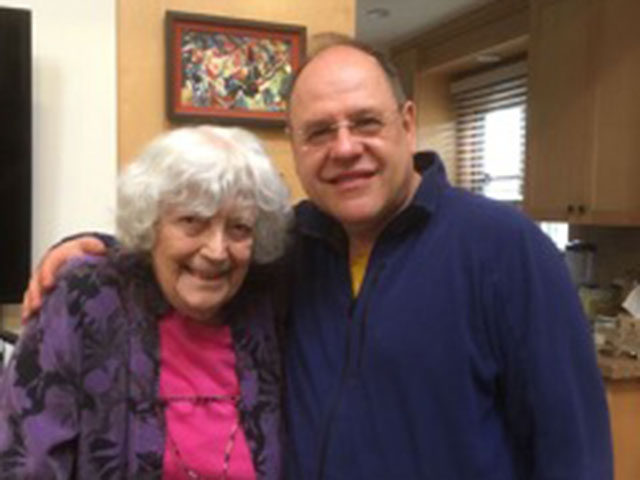
biannual conference, Malibu.

My intention is always to satisfy hopes and aspirations of participants in my workshops. If you feel dissatisfied with any aspect of the course kindly raise your concern directly with me in the first instance to see if a solution can be found. Should this not bring resolution there is an independent appeal process available.