These 2 in-person training courses, the second and third of 3 such short courses, will interest Gestalt counsellors and psychotherapists, senior trainees and also therapists from other disciplines.
Participants form a learning community and acquire knowledge and skills, working together in a small group setting.
When
Each course takes place over 3 consecutive days:
- Part 2: Friday 10 April to Sunday 12 April 2026
- Part 3: Friday 5 June to Sunday 7 June 2026
Hours are 10am to 5pm each day.
Venue
In person: Myrtle Road, London W3 6DX.
Good transport links (see location page for details).
The area is well served by cafes and restaurants.
Fees
£350 per person per module, payable by BACS – full details on application.
There is a discount for those booking both modules.
Each stand-alone module qualifies for 18 hours of CPD.
For more details and to book your place, contact me at jon.blend335@gmail.com.
Course content: Part 2
We critique some of Oaklander and McConville’s developmental ideas as we review ways of assessing and helping young people and their families.
We consider implications of recent brain research (Dr Mousley et al, 2025) which revises thinking about the age range of adolescence.
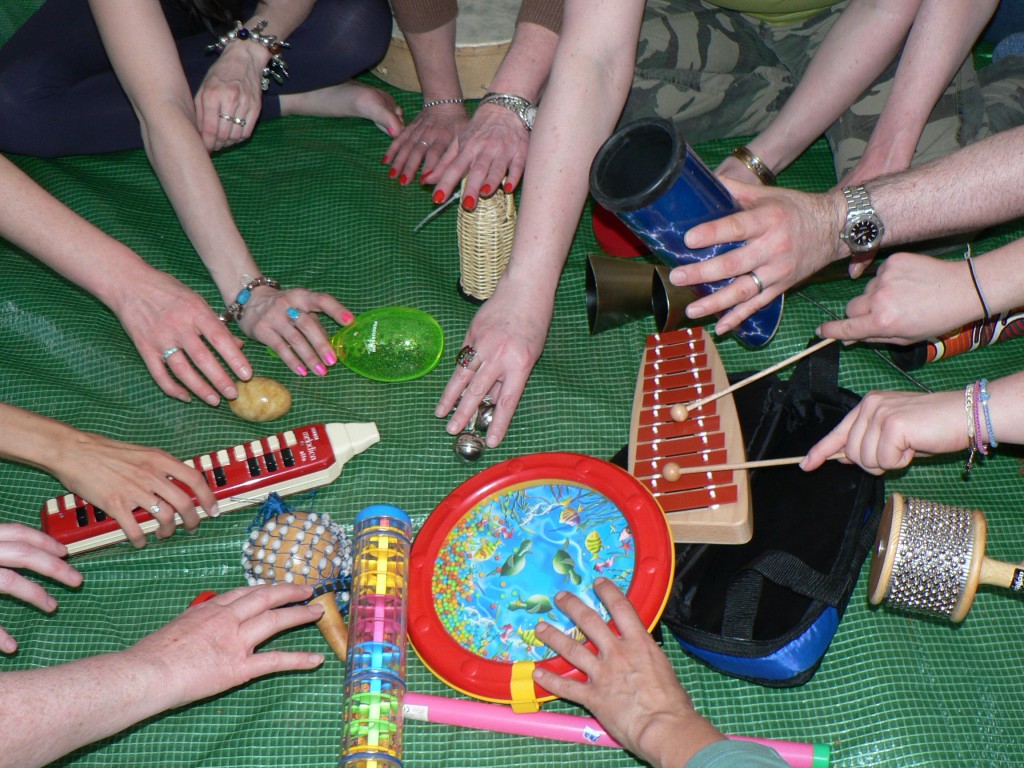
The group will explore Violet Oaklander’s approach to spontaneous ‘musicking’, using simple percussion and voice, also investigating composer Rod Paton’s Lifemusic (LM) – an accessible, fun approach to improvised music-making. For many, experience of LM boosts self-esteem as well as sharpening one’s attentive listening and ability to respond flexibly in the moment. Find out more about Lifemusic.
We consider Helen Bonny’s Guided Imagery with Music (GIM) method, and ways in which making a playlist on a smartphone can be used in group or individual therapy to explore with awareness areas of ‘unfinished or unresolved business’. (No prior experience of music-making nor musical skill is required any of this work.)
The group may wish to devote some time to supervision of client work using Oaklander and McConville’s approaches.
On day 3 we investigate drama and movement, including Ruella Frank’s ‘Six Fundamental Movements in Infancy and Beyond’ and Jean Piaget’s ideas about how infants navigate space. The group may also wish to consider some related issues: exploring proximity (closeness), touch and diversity.
If weather is good we may conduct our researches outdoors – in the garden or in local Acton Park.
Course content: Part 3
In Part 3 we again set aside time for supervision and feedback or clarification of using the Oaklander method in dialogic therapy with young people.
We also consider McConville’s ‘Cultural Anthropology’ alongside ways of working with older teens or young adults, with notions from Lampert, Shub and others.
The group may wish to explore puppetry and forms of creative writing using ‘instant poetry’ and/or group story-making.
In working with young people’s experiences of loss, the group may wish to explore making a commemorative video of a loved one as a keepsake.
Participants can revisit one of the expressive arts forms previously encountered in this 3-part workshop series for further exploration with optional tutor feedback.
Time permitting, we may focus on the process of setting up groups and on ‘pitching’ to commissioners of services.
We consider matters of referral on, reviewing and safeguarding. Participants may wish to think about personal ’next steps’ as the module ends.
Other info
Coco, our people-friendly, hypo-allergenic Cockapoo doggie lives on the premises. She may bark on your arrival though shouldn’t intrude on our work.
Quarterly supervision group
There may be opportunity to join a quarterly supervision group later in the year.
Participants are invited to become IAAGT members and to join CAEAIG – the child, adolescent and emergent adult interest group, which meets bimonthly on Tuesday evenings at 7pm UK time (or your local equivalent). Next sessions are 20 January and 3 March 2026.
To join CAEAIG, contact Nicola (IAAGT administrator) or me (Jon) at jon.blend335@gmail.com for details.
About Jon Blend (course facilitator)
Jon (MA Dip Child, Dip Psych) is an adult and child psychotherapist, writer and musician. He has delivered Oaklander-inspired trainings, conference keynotes and workshops to various therapy institutes in UK, Bulgaria, Canada, Hungary, Iran, Poland, Russia, Ukraine and USA. Jon first trained with mentor Violet Oaklander in 2000. He is an approved tutor of the Oaklander method working in association with the Violet Solomon Oaklander Foundation. He is also a faculty member of the Institute for Arts in Therapy and Education (IATE, Wellbeing Diploma).
During the pandemic, drawing inspiration from earlier visits to the nursery/school at Esalen, California, Jon established Gazebo Training School in West London. Here he worked creatively ‘al fresco’ with clients in nature. He continues to facilitate arts based trainings, working ‘under cover’, online and outdoors.
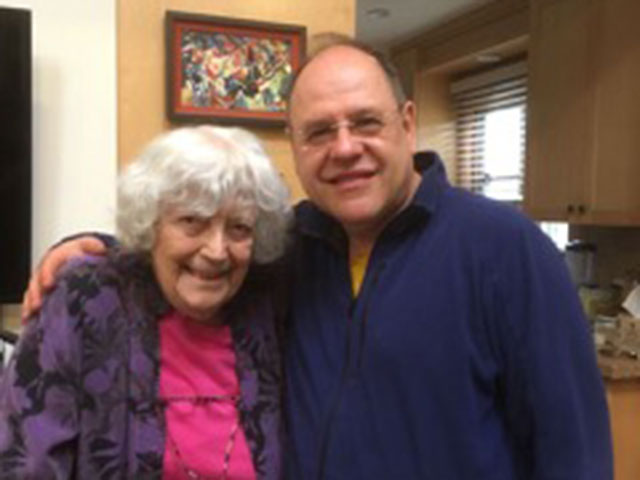
biannual conference, Malibu.

My intention is always to satisfy hopes and aspirations of participants in my workshops. If you feel dissatisfied with any aspect of the course kindly raise your concern directly with me in the first instance to see if a solution can be found. Should this not bring resolution there is an independent appeal process available.